OEM

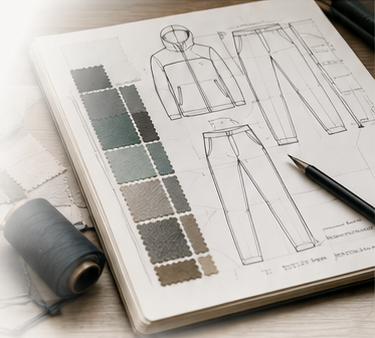
A complete OEM Tech Pack may already define measurements, bill of materials, construction, artwork and labeling.
Tech Pack / Measurements / BOM / Construction / Artwork
OUR PROCESS
Apparel development is not a straight line from sketch to shipment.
It is a sequence of decisions — about product purpose, fabric, fit, construction, branding, cost, timing and quality — that gradually turn an idea into something a production team can reproduce.
SunSync’s OEM & ODM apparel development process is built around one principle:
Do not release uncertainty into the next stage.
A project moves forward when the information needed for the next decision is clear enough to act on — not simply because the previous task has been marked complete.
Whether a project begins with a full Tech Pack, a reference sample, a sketch or an early product concept, our role is to help turn that starting point into a controlled, production-ready standard.
Two apparel projects may arrive with the same amount of information and still require very different development work.
So our first job is not simply to “start making the sample.”
It is to understand what has already been decided, what still needs development, and which unresolved decisions could affect feasibility, MOQ, cost, lead time or final product performance.
Good development begins by separating what is known from what is still assumed.
A complete OEM Tech Pack may already define measurements, bill of materials, construction, artwork and labeling.
Tech Pack / Measurements / BOM / Construction / Artwork

An ODM project may have a clear product direction but still require fabric selection, pattern development, fit engineering and construction decisions.
Fabric direction / Pattern development / Fit / Construction / Sample development

A Private Label project may begin from an existing product platform and focus mainly on color, branding, trims, labels and packaging.
Color / Logo / Labels / Hangtags / Packaging
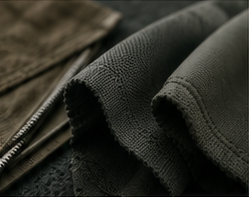
Sampling becomes expensive when it is used to discover decisions that should have been discussed earlier.
Before a development sample is released, we look at how the garment is expected to perform, how it should fit, which materials can realistically create that result, and which construction choices may behave differently once the product moves from one prototype into bulk production.
FABRIC & PERFORMANCE FIT & FUNCTION
 CONSTRUCTION & WORKMANSHIP
 BRANDING & DETAILS
 COST & PLANNING
The Product Category Changes.
The Discipline Does Not.
A development sample gives both sides something real to evaluate.
The product is no longer only a drawing, specification or reference image.
Now we can see how the fabric actually behaves. How the garment sits on the body. Whether the intended compression is too strong or too weak. Whether a waistband remains stable during movement. Whether a pocket changes the silhouette. Whether a hood balances correctly. Whether the chosen branding technique works on the selected material.
Sampling Is the Process of Replacing Assumptions With Evidence.
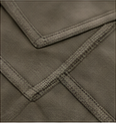
Revision is useful when each round reduces ambiguity.
The purpose is not to generate endless versions of the same garment.
It is to move the product toward a point where the buyer, development team and production team are all referring to the same version of the same product.
Development Should Leave Behind Decisions — Not Just Samples.

“Sample approved” should mean more than liking how a garment looks.
Before bulk production is released, the information production needs to repeat should be clear enough to move from the development team to the production team without unnecessary interpretation.
Approved sample · Measurements · Grading direction · Fabric · Color · Construction · Trims · Branding · Labels · Packing · Size breakdown · Testing / QC requirements
Development asks:
What should this product become?
Production asks:
Are we reproducing what was approved?
Once the production standard is released, the objective is no longer creative exploration.
It is controlled execution.
Material booking · Cutting · Sewing · Finishing · Packing
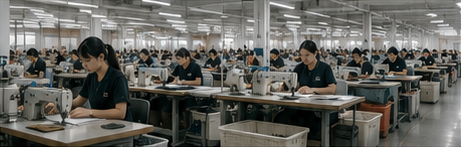
 First-Output ReviewIn-Line Quality ControlMeasurement ControlFinal InspectionPacking & LabelingOn-Time Shipment

Production planning is affected not only by how long the factory needs to make the garment.
It is also affected by how long important decisions remain unresolved.
A Clearer Approval Process Protects the Production Calendar.
Hood balance. Layering fit. Fabric behavior.
Compression. Waistband stability. Fit during movement.
Movement. Seam placement. Branding on the selected material.
Stretch. Fit. Lining. Branding on the selected material.
Progress Should Be Visible.
Confirmed information, open decisions and items being tested are kept visible. Buyer approvals, cost or timing effects, and what must be locked before the next stage remain part of the same project reference.
What Else Changes If We Do This?
The project leaves behind approved fit, fabric references, measurement history, construction, trims, branding, packing and production history.
SHIPMENT — RELEASED

Reorder Should Mean Reproduction — Not Rediscovery.
REORDER REFERENCE — SAVED
OVERALL STATUS — REFERENCE SAVED
It Is Ready When the Important Decisions Are Clear Enough to Be Repeated.

A briefcreates questions.
Developmentturns questions into decisions.

Samplingturns decisions into evidence.

Approvalturns evidence into a production standard.

Bulk productiontests whether that standard can be repeated.
A reorderproves whether what was learned was worth keeping.
The Process Is Complete When the Product Is Understood Well Enough to Be Made Again.
A Tech Pack. A sketch. A reference sample. An existing style that needs to work better.
Tell us what has already been decided and where the project still needs development.